A Failed Motor Does Not Always Mean a Failed System
The motor and dirt-collection unit are only one part of a built-in vacuum system. Many homes still have usable in-wall tubing, outlets and accessories even after the power unit has aged out.
Replacing only the power unit may be possible when the tubing, control wiring, mounting location and electrical service are compatible with the new equipment.
When to Repair a Central Vacuum Instead
A broken hose switch, damaged inlet, failed relay, or serviceable motor assembly may be less disruptive to address than replacing the entire power unit. What matters is the diagnosis, replacement-part availability and total condition of the equipment.
It is reasonable to consider the age of the unit, noise, maintenance history, frequency of failures and the desired cleaning performance before investing in a major repair.
Signs a Replacement Power Unit May Make Sense
Multiple recurring failures, extensive wear, hard-to-source components, damaged housings or a unit that no longer meets the home’s requirements may point toward replacement.
A new unit should be properly matched to the existing tubing system. Bigger equipment is not automatically the right equipment for every layout.
What Happens to the Old Tubing and Wall Inlets?
Serviceable tubing and inlets can often remain, but damaged joints, cracked tubing, poor seals, clogged lines and incompatible control arrangements can require additional work.
We distinguish the power unit from the rest of the installation so homeowners understand which components truly need attention.
Choosing the Next System: VacuMaid and Other Options
VacuMaid systems are an option for homeowners seeking a replacement or new installation. The correct selection depends on real installation requirements, manufacturer guidance and how the household uses its vacuum.
If you are considering Hide-A-Hose at the same time, discuss it up front. Retrofitting retractable hose storage may require dedicated piping rather than a simple power-unit swap.
Questions to Ask Before Buying a New Unit
Ask what has actually failed and how that failure was identified. If the motor is weak, was airflow measured or was weak pickup inferred from a blocked hose? If the unit runs continuously, was the low-voltage circuit evaluated? A clear diagnosis helps distinguish replacement needs from correctable control faults.
Consider the total installation scope: mounting, tubing connection, dirt collection access, electrical requirements and any new accessories. The right quote should describe what is staying, what is being changed, and what assumptions have been made about existing components.
Homeowners planning to remodel may want to combine the replacement with inlet upgrades. But an upgrade should serve a real cleaning need, not merely add equipment. If a retractable hose is desired, evaluate that installation separately from the power-unit replacement.
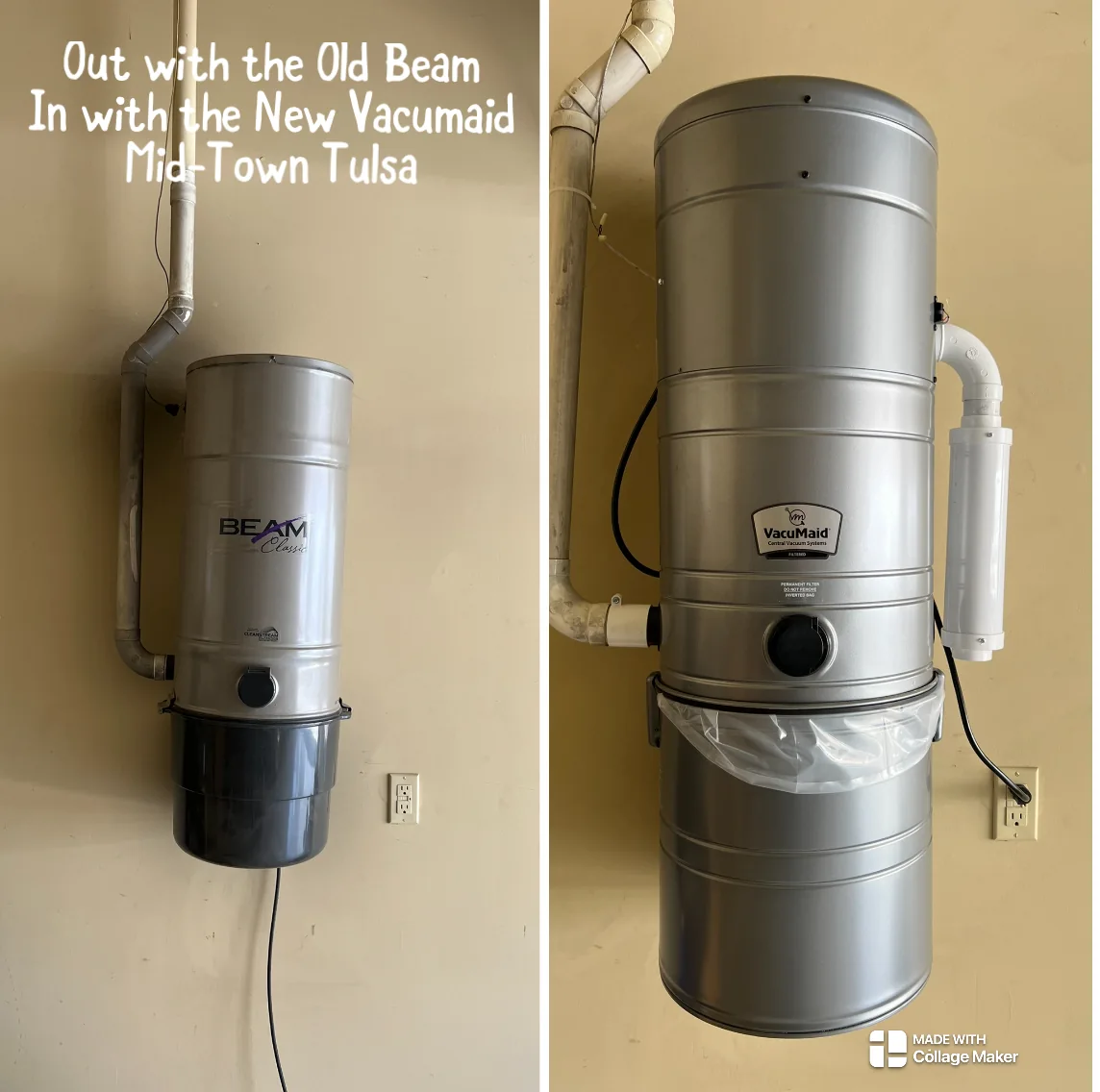
Before and After: Understanding a Central Vacuum Upgrade
A before-and-after project should identify the original brand, the new unit and what was retained or replaced. These real installation details are more meaningful than unverified claims about suction gains.
Call or text ProVac Tulsa with your existing model information to discuss a practical upgrade path.
Frequently Asked Questions
Do I have to replace the pipes in my walls?
Not necessarily. Serviceable compatible piping and inlets can often be retained when replacing the power unit.
Is motor repair always cheaper than replacing the unit?
No. Overall condition, part availability and the nature of the failure determine which option makes sense.
Can I upgrade to Hide-A-Hose during replacement?
It may be possible, but retractable hose installation often requires additional specially planned tubing.
Need Help With Your Central Vacuum?
Talk with ProVac Tulsa about your system, symptoms, installation plans, or the next practical step. Serving Tulsa and surrounding communities.
Call (405) 777-3381Text (405) 777-3381